Tesla officially confirmed the start of Cybercab production at Gigafactory Texas this week. The automaker hit its target for an April 2026 launch, and the assembly lines are now building the new vehicle for the test fleet. The two-seat robotaxi comes without a steering wheel or pedals, and it relies entirely on the company’s autonomous driving software to drive on public roads.
This production milestone follows months of site preparation at the Texas facility, where crews spent the winter installing new robotic equipment. Now the factory floor is turning out finished units for the first time in the program’s history, and the company plans to ramp up output over the summer.
A glossy exterior replaces bare metal
Recent visuals confirm the final production design features a glossy bronze-gold metallic finish. This painted exterior departs from the bare stainless steel seen on the Cybertruck.
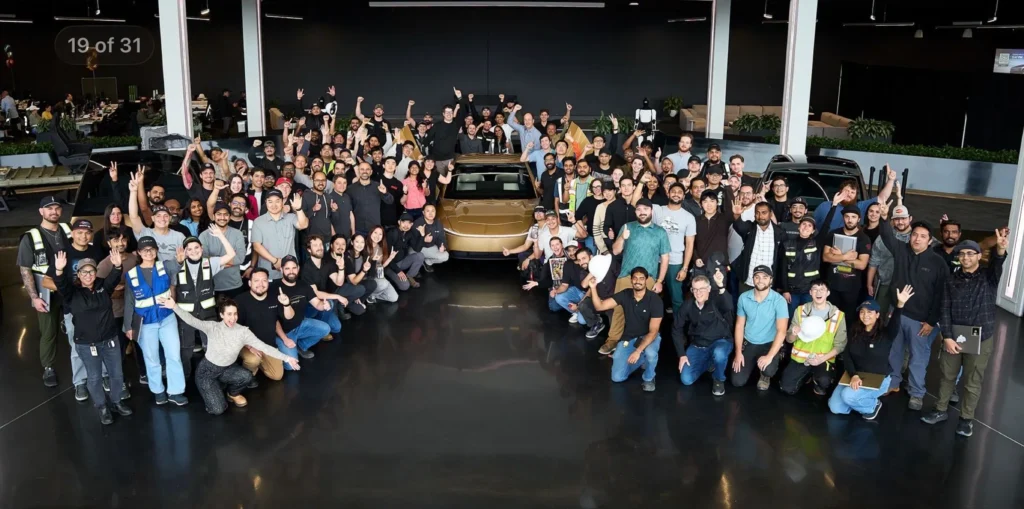
And the minimalist interior matches early concept art, keeping the cabin simple without any manual controls. And the paint process likely required new equipment at the Texas plant to handle the unique metallic coating.
A driverless future approaches
Building a car without human controls presents unique regulatory hurdles for any automaker. Yet Tesla continues to push its software development alongside the hardware rollout at the factory. Volume production adds another major product line to the massive Texas facility, and later this year the company plans to scale manufacturing output to meet expected demand.
The automaker still needs to prove it can run a ride-hailing network and maintain a large fleet of vehicles. Local approvals vary by state, and the company must clear these legal roadblocks before commercial deployment begins in major cities. Then safety regulators will scrutinize the crash data from the early production units to verify the occupant protection systems.
Waymo already operates driverless cars in several cities, but those vehicles rely on expensive radar and lidar sensor arrays. Instead, Tesla uses a camera-only approach, and this strategy keeps the vehicle production cost down. Financial analysts see the Cybercab as a critical piece of the company’s long-term valuation, and the successful launch of the April production line keeps the financial narrative intact.
Engineering challenges and hardware updates
The final vehicle design incorporates several engineering updates from the early prototypes. The company refined the aerodynamic profile to maximize battery efficiency during city driving, and the lack of traditional mirrors removes weight from the exterior. And the custom tires reduce rolling resistance for better range.
Engineers spent months optimizing the production line to handle the new unboxed manufacturing method. This process builds large sections of the car separately before joining them together at the end, and this strategy speeds up assembly to increase factory output.
The company has not shared exact production volume targets for the rest of the year. Customers cannot buy the vehicle for personal use right now, and instead, the initial units will likely feed directly into the company’s internal test fleet. The next major hurdle involves securing state permits to operate commercial robotaxi services. The technical hardware is ready, but now the software and regulatory approvals must catch up to the manufacturing pace. The coming months will test the company’s ability to maintain production quality, and the whole automotive world is waiting to see the results.
We’ve launched an official Tesla Owners Online Forum. Join early and claim your "Founding Fuel" badge.