Tesla has been granted a patent for an electric ducted fan system that pulls air from under a car and pushes it out the rear. The goal is downforce. The U.S. Patent and Trademark Office issued patent number US 12,746,987 B1, titled “Electric Fan Car,” on September 29, 2026.
The filing, submitted on January 17, 2024, describes an inlet on the underbody connected to a duct that rises toward a larger rear outlet. Four axial electric fans sit side by side in the duct, separated by vertical strakes. When activated, the fans extract air from beneath the vehicle and discharge it rearward. This lowers pressure under the floor, creating suction that presses the car onto the road and can increase tire grip.
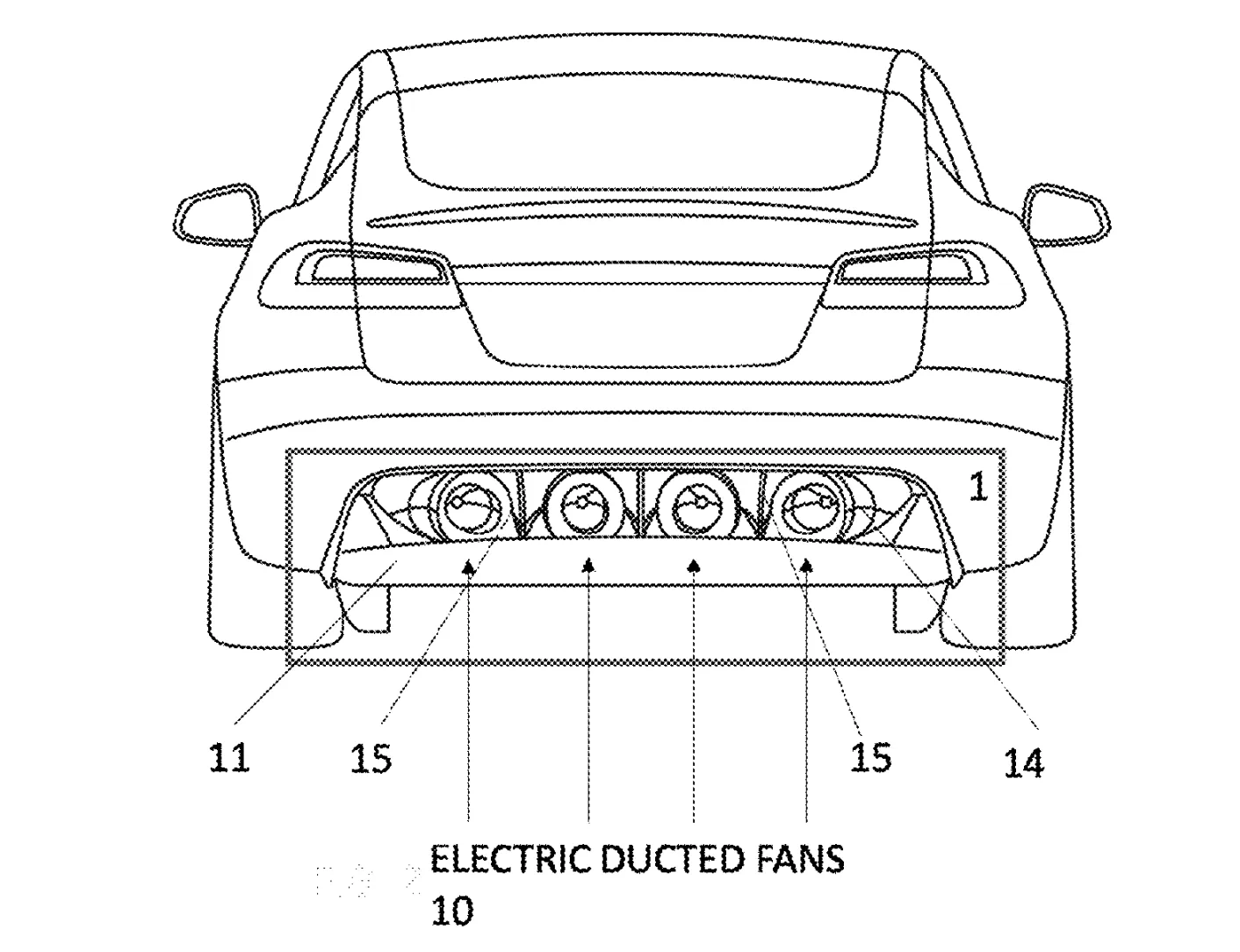
The system runs on the vehicle’s high-voltage traction battery and links to the car’s control system. A driver can switch it on manually or the car can engage it automatically based on speed and other conditions. The patent also mentions a second diffuser that can supplement downforce, and the ducted fans may work without deployable parts extending below the vehicle.
How the fans work
Conventional wings and passive diffusers need speed to generate downforce. Tesla’s fan system does not. It can produce downforce when the car is moving slowly or even when stationary, which could help launch traction, cornering, and braking stability. When the extra grip is not needed, the controller can reduce fan output or shut the system off.
The patent does not state how much downforce the fans can produce, how much battery they consume, or what effect they would have on range, noise, and durability. These are open questions until Tesla shares more detail.
Second Tesla fan patent
The new grant follows an earlier Tesla patent, US 12,377,920 B1, titled “Adaptive Vehicle Aerodynamics for Downforce,” issued in August 2025.
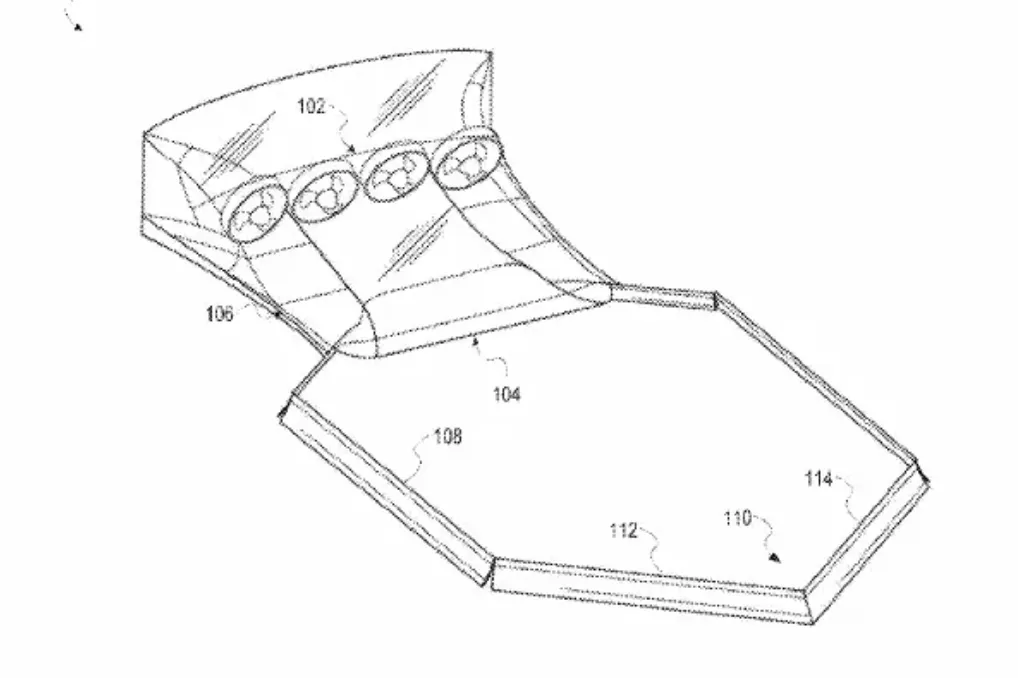
That design uses fans, airflow pathways, and deployable skirts to create bounded low-pressure zones under the car. It supports different modes, including a full skirt setup for maximum low-speed suction on smooth surfaces and a partial configuration using side skirts with front and rear elements retracted for uneven roads.
The latest patent tackles the same goal with different packaging. Instead of skirts, it uses four rear ducted fans linked to an underbody inlet and diffuser. The filings indicate Tesla is exploring more than one way to achieve speed-independent downforce, though neither patent confirms production plans.
Roadster connection
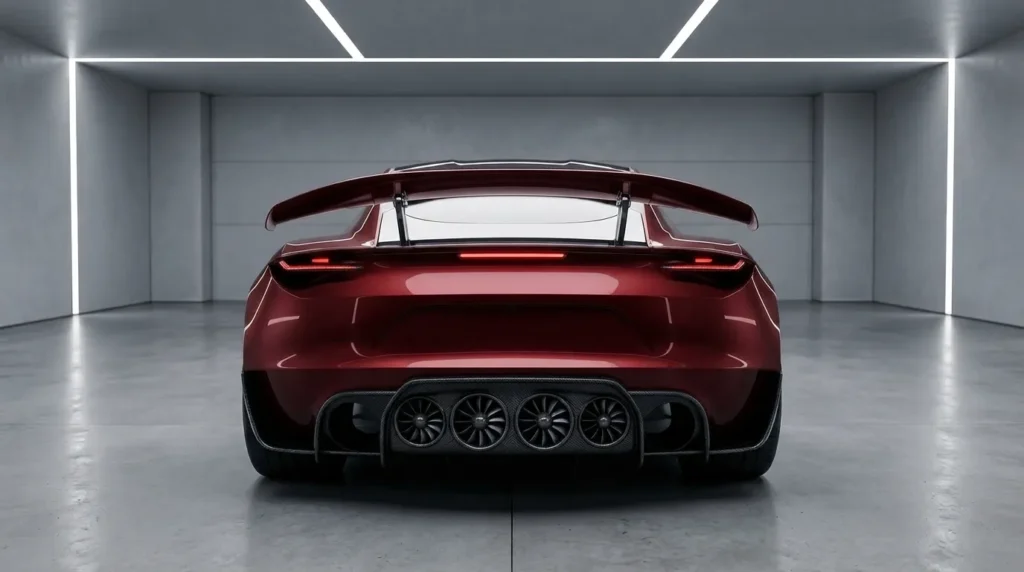
Tesla’s recent teaser for the next-generation Roadster shows four bright, exhaust-like features at the rear, and the patent drawings depict four circular fan outlets in a similar horizontal arrangement. The vehicle in the patent sketches resembles a Model S, and the document does not mention the Roadster by name.
The four teaser elements have been widely read as nozzles for the proposed SpaceX package. In 2018, CEO Elon Musk said the option would use about 10 small cold-gas thrusters arranged around the car to improve acceleration, top speed, braking, and cornering, possibly allowing brief flight. He described a system using compressed air stored in a composite overwrapped pressure vessel, replenished by an electric pump when battery power was available.
Fans and thrusters
The fan system and cold-gas thrusters serve related but distinct functions. Fans create aerodynamic downforce by moving air through the car, pressing tires into the road. Thrusters expel stored gas to apply direct force in a chosen direction, independent of tire traction. In theory, a car could use both: fans for steady grip and thrusters for short bursts of forward thrust, braking assistance, or cornering help.
The new patent does not claim integration with thrusters, nor does it mention flight, hovering, rockets, or the SpaceX package. Any combined system remains speculation rather than a disclosed Tesla plan.
The patent protects Tesla’s implementation but does not prove production readiness. Companies often patent ideas they test, retain for strategic reasons, or never commercialize.
Tesla now holds two recent U.S. patents covering fan-assisted aerodynamics: the skirt-based adaptive system from August 2025 and the four-fan duct-and-diffuser system from September 2026. The latest filing offers a plausible clue about the Roadster’s rear design, but until Tesla reveals hardware or specifications, it remains a clue.
You can find the official patent below:
We’ve launched an official Tesla Owners Online Forum. Join early and claim your "Founding Fuel" badge.