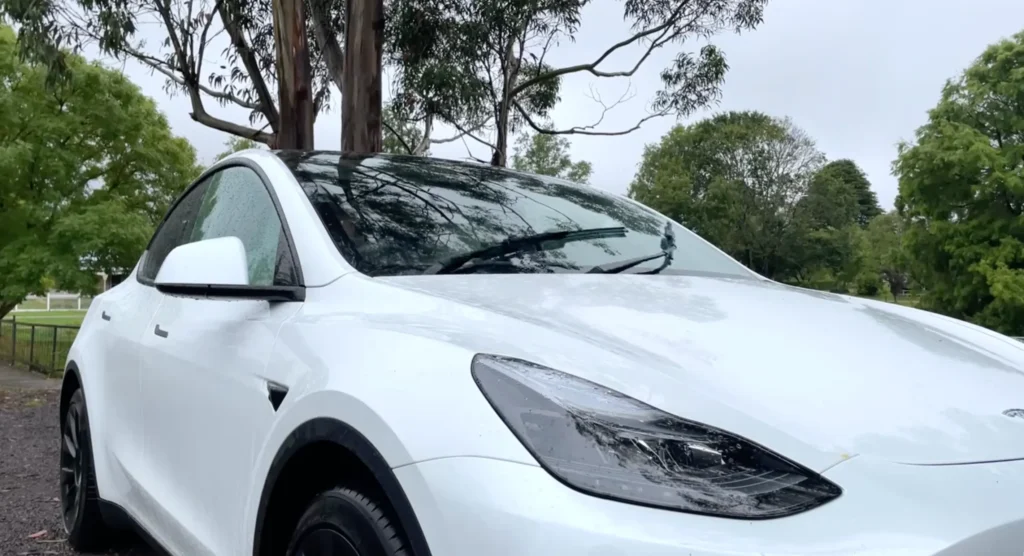
Tesla has rolled out a fix for one of its most talked-about driving frustrations, the vision-based automatic wiper system. Senior Staff Engineer Yun-Ta Tsai confirmed that the company has moved from a single-frame detection approach to a full surround-video setup, and this update is now active across the global fleet.
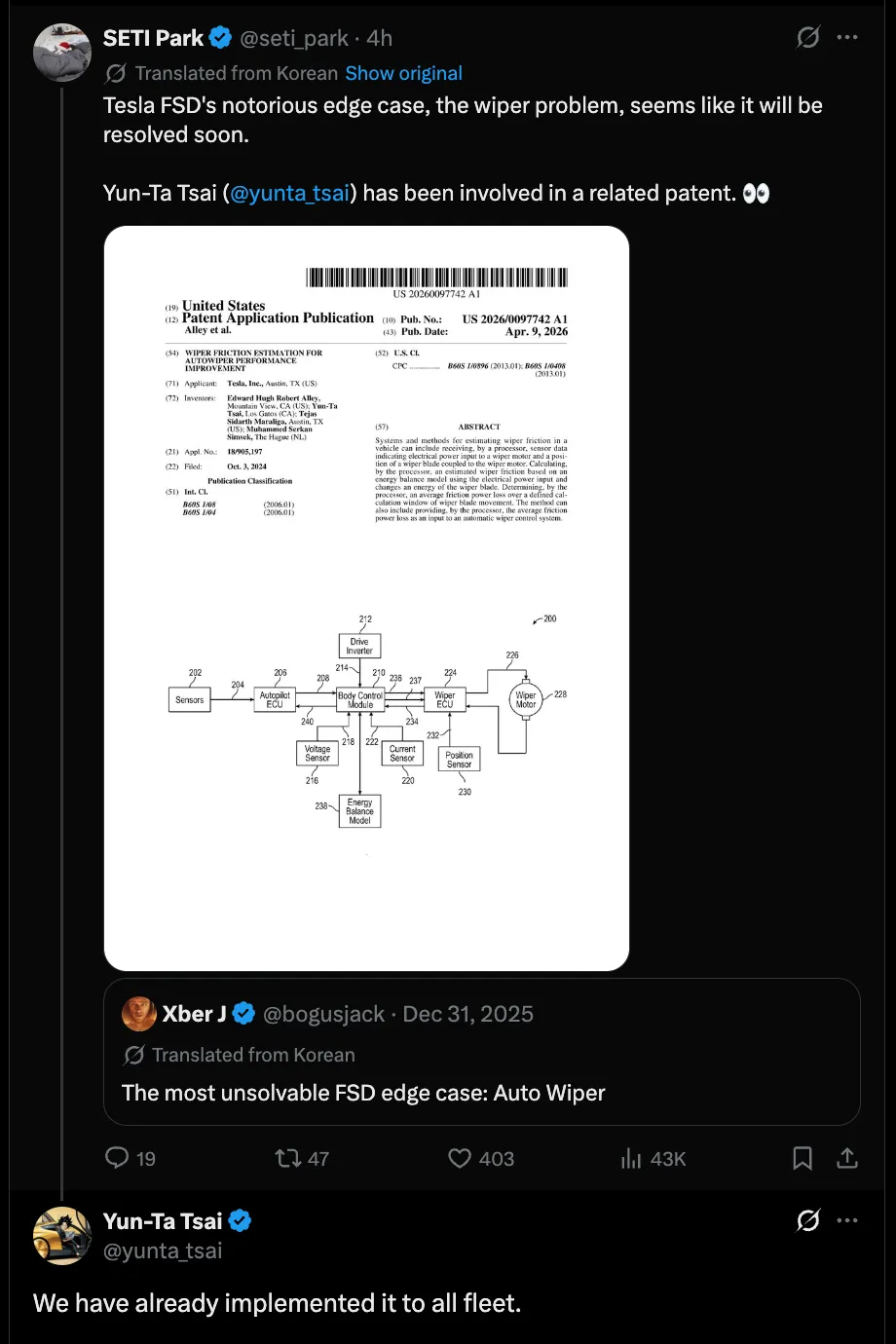
For years, many Tesla owners complained about the wipers acting unpredictably. Sometimes they ignored light rain or mist, and other times they triggered on a clear day, scraping across a dry windshield. This happened because older versions relied on a single camera and single-frame neural network that could mistake glare, dust, or shadows for rain.
The new architecture, known internally as wiper_vision_v5, works in a completely different way. Instead of depending on one camera, the system now uses all external cameras to confirm rain and moisture. The AI can spot spray from passing cars and see small droplets forming on the hood, creating context before reacting. This multi-camera, time-aware view eliminates the random wipes and missed activations that frustrated owners for years.
Global rollout and software update
The fix became widely available with Tesla’s software version 2026.2.3, released in February 2026. Company data indicates that more than 60% of Tesla vehicles worldwide were updated by mid-February. That number includes older models still running Hardware 3 in North America, meaning the improvement is not limited to the newest hardware.
One key part of this upgrade is the Photon Count Network, an advanced neural model built by Tsai to handle poor visibility without dropping safety performance. When heavy rain used to trigger “FSD degraded” notices, driving would slow and sometimes pause. Now the system keeps safety features active but intelligently limits maximum speed instead of shutting them off completely. That change makes it safer to keep Autopilot and Full Self-Driving engaged in rough weather.
Engineering leadership behind the fix
Much of the progress traces back to Yun-Ta Tsai’s leadership. He came to Tesla with experience from Google Research and NVIDIA, focusing on computer vision and computational imaging. His consistent push to stabilize the vision stack helped move Tesla past one of its biggest edge cases. Tsai even made headlines when he declined a job offer from Meta, saying he was fully committed to Tesla’s mission to launch the Robotaxi and achieve what he called “sustainable abundance” with CEO Elon Musk.
The same update brought everyday features like “Child Left Alone Detection” and a smoother charging cable unlatch process. But engineers say the real milestone was this quiet change in how the car understands its surroundings. By relying only on cameras instead of adding infrared or rain sensors again, Tesla strengthened its argument for a pure vision-driven path to autonomy.
The fix may seem small, but it settles one of Tesla’s most visible software issues and gives owners a better daily driving experience. More important, it validates the company’s confidence in solving environmental detection issues through vision alone.
And for anyone tired of dry wiping on a sunny day, this update finally brings relief.
We’ve launched an official Tesla Owners Online Forum. Join early and claim your "Founding Fuel" badge.