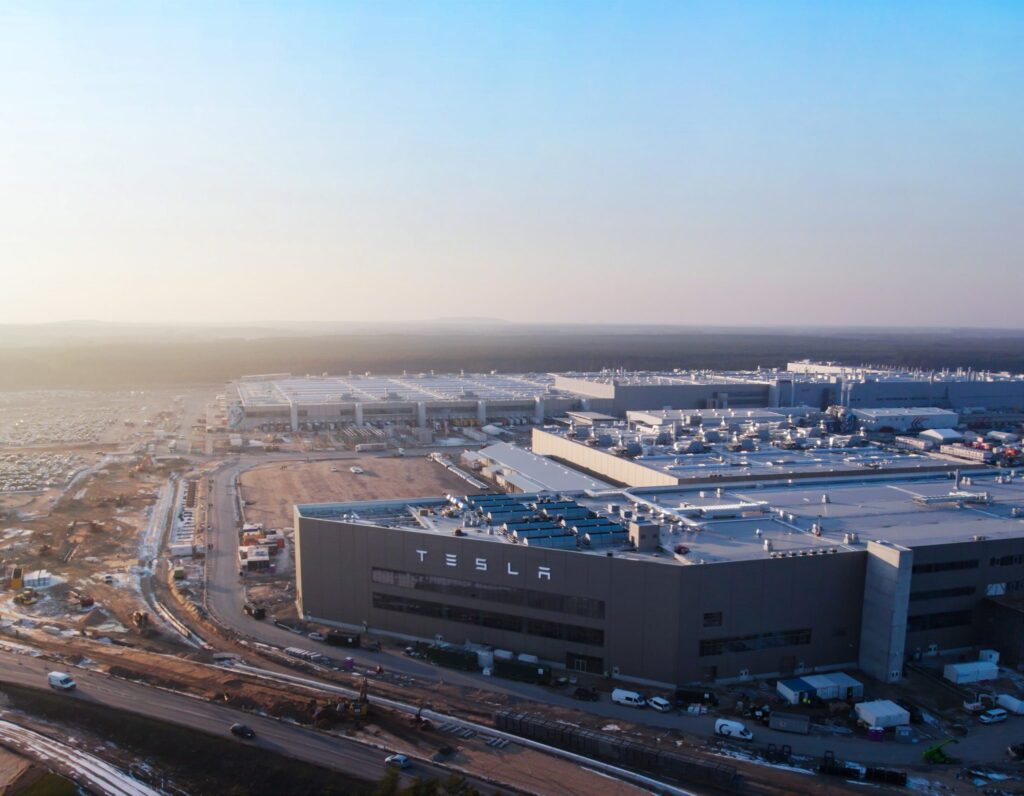
Tesla’s factory in Grünheide near Berlin is again in conflict with IG Metall over working hours and pay levels. The union wants a collective agreement that includes the 35-hour workweek that is common in Germany’s metal and automotive sector.
Plant manager André Thierig has taken a clear stance against that demand. He called the move to a 35-hour week a red line and said Tesla will not accept this change at Giga Berlin. And he argues the plant needs its current structure to stay flexible and efficient in a competitive market.
2026 works council vote tied to expansion
A key date for the site is the next works council election, which is planned for 2026. Thierig says the outcome will decide how independently the plant can operate in the future.
He warned that if candidates backed by IG Metall win a majority, Tesla’s expansion plans in Grünheide may be frozen. He added that he “cannot imagine” that decision-makers in the United States would keep pushing expansion if the vote favors the union side. So the election has turned into a test both for labor influence and for future investment in Brandenburg.
IG Metall says Tesla pay still trails rivals
IG Metall disputes Tesla’s upbeat picture on wages, even after the recent raise. District manager Jan Otto told DPA that without a collective agreement, earnings at Giga Berlin remain well below those at other German car factories.
He says Tesla narrows the gap on paper by comparing its pay with the lowest income brackets in metal-industry agreements. But he points out that these two lowest pay grades are not used in modern car plants, so he argues that the comparison gives workers the wrong impression of how far behind they are. And union officials say that when the 40-hour week at Tesla is set against the 35-hour week in many other factories, the effective income difference can widen even more.
Tesla highlights recent pay rises to defend its position. Thierig notes that current sector agreements provided for wage growth of about 2 percent this year.
He says Tesla doubled that figure at Giga Berlin with a 4 percent raise. And he links this step to Tesla’s decision to remain outside a collective agreement, arguing that the company’s situation allowed faster and larger increases than the wider industry. He also states that since production started in Grünheide, wages have climbed more than 25 percent in under four years.
High-stakes dispute for plant and sector
This conflict comes as Germany’s auto sector faces high costs, a shift to electric vehicles, and strong global competition. Tesla argues that its current model on working hours and direct wage decisions helps keep the plant competitive and supports jobs at Giga Berlin.
IG Metall, for its part, seeks to bring Tesla staff closer to the standards at long-established German carmakers. And the 2026 works council election now carries extra weight, since it may shape pay, working time, and the size of Tesla’s long-term presence in the region.
We’ve launched an official Tesla Owners Online Forum. Join early and claim your "Founding Fuel" badge.