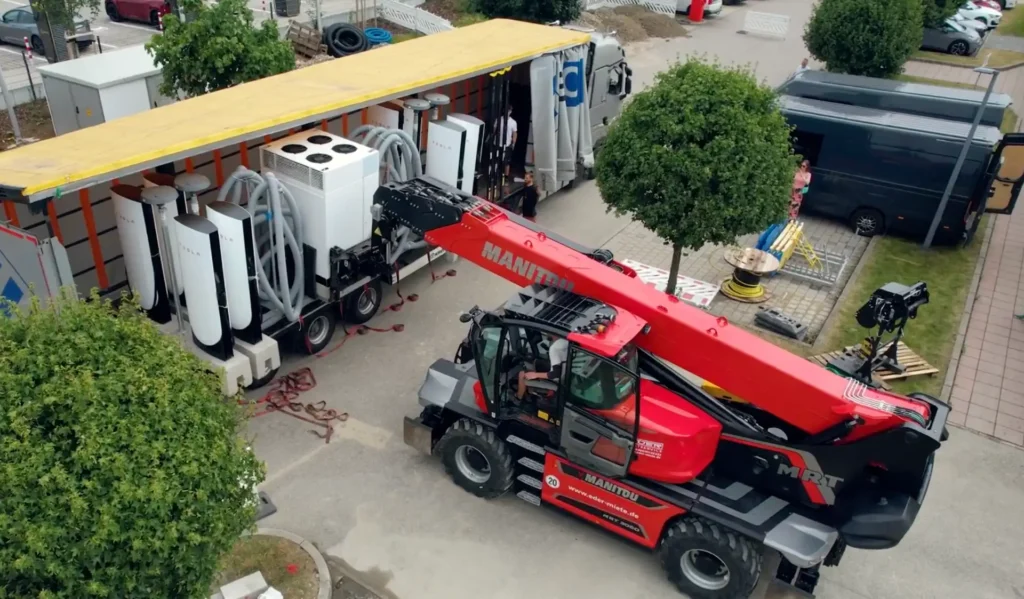
Tesla has deployed a factory-built charging structure dubbed the Accordion Supercharger, cutting installation costs by roughly 20% and fitting 16 stalls onto a single transport truck. The company designed the hardware to expand inside trenches between parked vehicles at locations where dispensers cannot sit behind an existing curb.
The official Tesla Charging team published video of the new hardware on social media platform X with a direct statement outlining the strategy: “Our first Accordion Supercharger. Our goal is to pre-assemble all Superchargers in a factory. If we can’t install Superchargers behind a curb, we now have a pre-assembled solution for Superchargers between parking spaces. 16 stalls per truck shipment, 20% cheaper to install, instant commissioning, highest quality.”
Video:
Our first Accordion Supercharger
— Tesla Charging (@TeslaCharging) September 15, 2026
Our goal is to pre-assemble all Superchargers in a factory. If we can't install Superchargers behind a curb, we now have a pre-assembled solution for Superchargers between parking spaces.
16 stalls per truck shipment, 20% cheaper to install,… pic.twitter.com/KlmczpLoPR
Industry observers tracked down the earliest deployment to an FC Bayern retail shop property in Irschenberg, Germany. That site sits alongside two fast-food restaurants, and user images uploaded to regional directories confirmed the station went live without protracted electrical work. Conventional stations rely on dispensers set behind curbs where cars back straight in toward the perimeter. However, many existing retail lots feature painted spaces facing each other without raised dirt islands, leaving technicians with few places to anchor posts. The Accordion hardware addresses that geometric hurdle directly by turning the seam between facing parking stalls into a charging corridor.
Trench installation and field setup
Field crews begin the setup by digging an open trench down the center line separating two rows of parking spaces. Then a heavy telehandler or large forklift lifts the grouped assembly out of a covered freight trailer and lowers the metal skeleton into the opening. Once inside the trench, workers pull the interconnected base pads outward like musical bellows so each stall island lines up with vehicle borders. Flexible heavy-duty conduits run from the central cabinet to paired dispenser pads on each side.
Crews backfill the trench with soil, lay paving stones across the surface, and tie the cabinet into the utility grid. But the real time advantage occurs during the electrical verification stage. Factory workers wire the internal coolant lines and test the connections before the equipment leaves the warehouse, so the hardware arrives verified. In fact, station managers avoid days of manual diagnostics, permitting what Tesla calls instant commissioning once utility lines supply voltage.
Each Accordion cluster couples eight V4 dispensing posts to a single V4 electronics cabinet. The underlying dispensers can push up to 500 kilowatts of peak electricity into vehicles built on high-voltage architectures like the Cybertruck. Meanwhile, the shared central cabinet carries an overall electrical rating reaching 1.2 megawatts.
The system uses standard North American Charging Standard connectors alongside European combo hardware depending on local geography. Still, the physical foundation remains identical across markets. Every pair of stalls rests on a precast concrete block built to anchor dispensers firmly against curb bumps and parking mishaps. Tesla engineers calibrated the internal busing and fluid channels for heavy throughput, so adjacent stalls share load without overheating during peak travel periods.
Freight efficiency and cost cuts
Moving heavy infrastructure across long highway routes frequently drives up site expenses. To reduce those shipping fees, Tesla configured the Accordion frames so two eight-stall units fit onto one standard flatbed rig. That setup brings 16 complete stalls to a job site in one run, improving freight capacity over older pre-assembled V3 units that topped out at 12 posts per truck.
Fewer deliveries lower fuel costs and crane rental fees for developers. And avoiding deep electrical rewiring on the asphalt eliminates prolonged site downtime for business owners hosting the stations. Tesla reported the combined assembly reduces overall station installation costs by 20% compared with traditional on-site construction. Analysts note that earlier prefabricated V4 designs brought average stall build costs down near 40,000 dollars in the United States, and this new between-space format extends similar financial benefits to constrained urban lots.
Earlier folding units set groundwork
This rollout follows Tesla’s launch of hinge-based Folding Unit Superchargers earlier in 2026. Those earlier packages featured side wings that folded flat for travel, allowing crews to unfold eight stalls in a straight curb line or place two rows back to back. That design proved that pre-assembled electronics could eliminate field busbar connections and remove the requirement for specialized company technicians during turn-on.
Yet standard curb designs could not solve locations where landowners refused to sacrifice perimeter sidewalks or tear out perimeter trees. So the Accordion layout adapts the same prefabrication philosophy to the interior avenues of parking plazas. By pairing the earlier folding hardware with this new expandable trench rig, Tesla can now drop standardized hardware into almost any parking footprint while factory crews handle the bulk of the assembly work.
We’ve launched an official Tesla Owners Online Forum. Join early and claim your "Founding Fuel" badge.