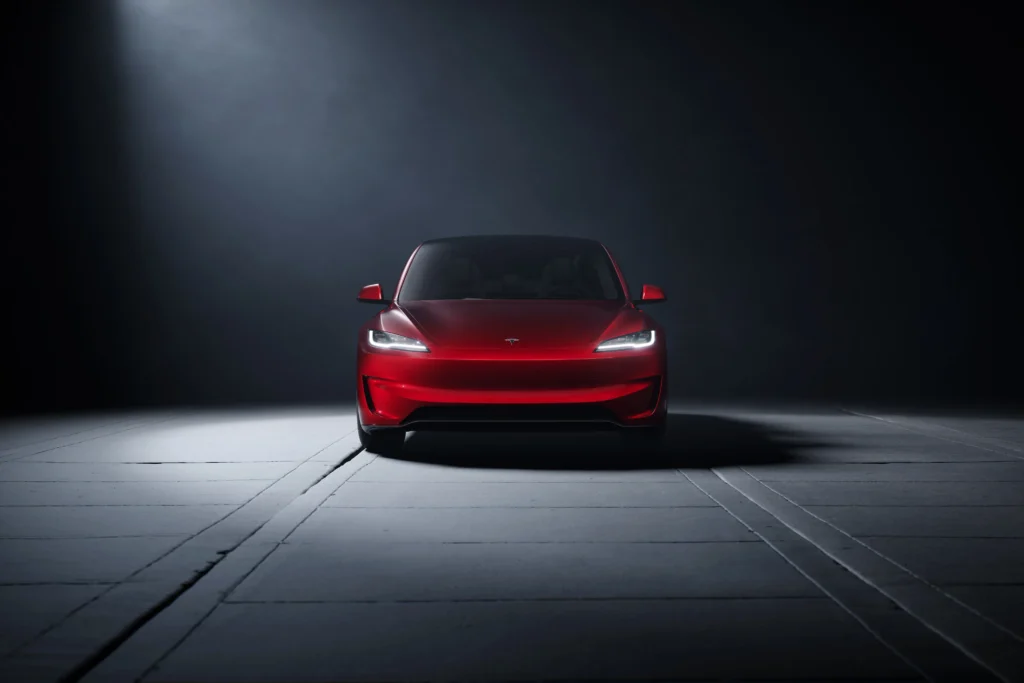
Tesla might eventually build a three-motor Model 3. Recently, Vice President of Engineering Lars Moravy appeared on the Ride the Lightning podcast to talk with host Ryan McCaffrey. McCaffrey asked him if a third motor could fit inside the smaller sedan, and Moravy answered by saying “I think about it all the time”. Instead of dismissing the idea, he called it a challenging engineering puzzle. Still, he confirmed the company has no official product program for it right now. Currently, the automaker prioritizes other goals like the next-generation Roadster and full self-driving development.
The main hurdle involves making parts fit. For example, Moravy talked about taking the carbon-sleeved electric motors from the larger Model S Plaid and putting them in the Model 3 platform. The current Model 3 Performance relies on a dual-motor setup. One motor sits on the front axle, and another drives the rear. Naturally, adding a third motor requires major structural adjustments. When engineers look at the car today, the rear subframe is tightly packed. Then, they would need to find room for the extra drive unit, upgraded electrical components, and new cooling systems.
Limits of the current design
Track driving enthusiasts frequently mention the car is already pushing its physical limits. Right now, the Performance trim operates near its maximum weight and braking capacity. A massive increase in engine output would force a complete redesign of the chassis and suspension. Obviously, upgraded brakes are a strict requirement for safety. The battery pack presents another problem. Today’s Model 3 holds roughly an 80 kWh battery. Analysts say that pack cannot easily support a 1,000-horsepower output without severe heat buildup or a huge loss in driving range.
This discussion happens right as the company changes its vehicle lineup. Soon, production of the Model S and Model X is winding down. The original Model S Plaid featured a tri-motor layout producing about 1,020 horsepower. It promised a 0-60 mph time of 1.99 seconds with rollout and hit a top speed of 200 mph. Today, that level of extreme speed is missing from the current offerings. The refreshed Model 3 Performance is fast, but it is slower than the retired Plaid cars. So, many fans want a new Plaid version to fill that empty spot at the top.
Focus on the new Roadster
Engineers are spending their time on different projects today. Right now, the next-generation Roadster serves as the main testbed for extreme performance parts. That sports car gets the newest battery technology and motor designs first. Moravy explained that technology could eventually trickle down to other cars later. Previously, the original Model S Plaid hardware eventually influenced the rest of the fleet. Yet, he made it clear that any Model 3 upgrades depend heavily on the Roadster finishing development.
Building a tri-motor compact car comes down to business decisions. Moravy called the idea a work for reward scenario. Basically, the heavy engineering effort required to redesign the Model 3 must make financial sense. The market for extreme track sedans is small. Corporate priorities have moved to robotaxis and manufacturing efficiency. Market observers think high-performance trims might fade away entirely as the brand focuses on autonomous driving. Eventually, the Roadster will likely stand alone as the only speed-focused car.
Fan speculation continues to grow online. However, none of those ideas exist in the real world yet. Moravy’s podcast comments confirm that Tesla engineers talk about the concept behind closed doors. The company often tests wild prototypes at the Nürburgring before deciding what to build. A compact Plaid sedan could become a real option later. Until then, buyers hoping for a clear release date will have to wait indefinitely.
We’ve launched an official Tesla Owners Online Forum. Join early and claim your "Founding Fuel" badge.