Tesla’s China team has shared a new teaser for its Optimus humanoid robot, and the focus this time is on the hands. The image highlights a pair of next-generation hands that look much closer to human hands in shape and proportion than earlier versions, drawing fresh attention to Tesla’s push into humanoid robotics.


The teaser was posted by Tesla AI’s account on Weibo and then reposted by Tesla watchers on X, giving the first clear look at a design that appears slimmer, more anatomical and more refined than before. The fingers in the image have joint spacing and overall length that resemble a human hand, and the palm structure looks less mechanical and more organic than earlier Optimus prototypes.
Hands seen as major technical challenge
Engineers and analysts have said for years that hands are one of the hardest parts of a humanoid robot. A robot can walk or balance with relatively few joints, yet to pick up tools, operate machines or handle household objects, it needs precise control of many small movements in the fingers and wrist. For Tesla, that challenge has been front and center.
Tesla had run into trouble with its earlier hand design and slowed Optimus production as a result. The company built up inventory of robot bodies without completed hands and cut its 2025 target from around 5,000 units to roughly 2,000. That history is one reason this new teaser is drawing attention as it signals that Tesla is still working hard on this part of the robot.
From early hands to high-dexterity designs
Optimus has moved through several hand versions in only a few years. Early public demos used relatively simple grippers that could hold boxes or small parts but did not aim for human-level dexterity. Later, Tesla showed a second-generation hand with around 11 degrees of freedom, enough for basic grasping and some finger articulation.
By 2024, a third-generation design had emerged with about 22 degrees of freedom, a tendon-driven layout, and actuators moved into the forearm to reduce weight at the fingertips and improve control.
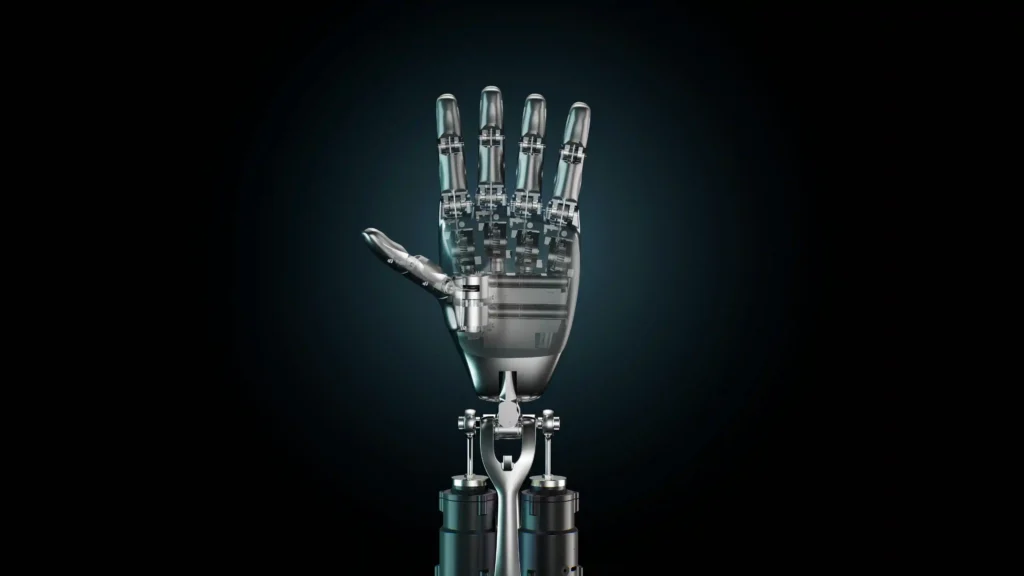
Engineers say this type of architecture can allow smoother motion and more natural-looking grip patterns. In 2026, Elon Musk and third-party technical breakdowns pointed to another step, roughly 25 actuators per arm and hand, or about 50 per robot, along with tactile sensors at each fingertip to detect pressure, vibration and temperature.
For comparison, a human hand has on the order of a few dozen mechanical degrees of freedom, depending on how you count the joints. So the latest designs bring Optimus closer to that range, at least on paper. If those hands match their specifications in real-world use, they could allow tasks such as handling fragile items, threading connectors or operating small tools.
Optimus V3 nears public debut
This new hand teaser arrives as Tesla prepares what it calls a production-ready third generation of Optimus, often referred to as Optimus V3. Tesla China has hinted that this version is close to a public launch, with local posts describing an upcoming official reveal and increased internal focus on the project.
Company commentary and outside reporting indicate that Tesla wants to move Optimus from lab and pilot status into broader factory use first, then later into commercial sales. Musk has talked about a path to mass production, with a long-term goal of reaching up to one million units per year if demand and manufacturing capacity align. To make space for this push, Musk has said Tesla intends to wind down production of its Model S and Model X vehicles, reallocating resources toward Optimus and newer programs.
Musk’s Von Neumann machine claim
Musk has gone far beyond near-term factory plans in his public comments. On X, he has described Optimus as Tesla’s most important long-term product and made a striking prediction about its role in the future. In one recent post, he wrote: “Optimus will be the first Von Neumann machine, capable of building civilization by itself on any viable planet.”
A Von Neumann machine, based on the work of mathematician John von Neumann, is a theoretical self-replicating system that can build copies of itself using raw materials from its environment. Musk also linked this idea to a wider vision in which Optimus units work with SpaceX missions, helping set up infrastructure off Earth and eventually assisting in building settlements on Mars.
Experts in robotics and manufacturing say that vision remains far from today’s prototype robots. For such a system to exist, a robot would need not only dexterous hands and advanced AI, but access to complex supply chains or highly capable automated factories that themselves may not yet exist.
You may also like to read:
- Musk claims Tesla could be first with humanoid AGI robots »
- Elon Musk says AI could get 100x smarter without new chips »
- Tesla AI4 brings two parallel brains to self-driving and Optimus »
- Tesla Optimus running test sets new lab record »
We’ve launched an official Tesla Owners Online Forum. Join early and claim your "Founding Fuel" badge.