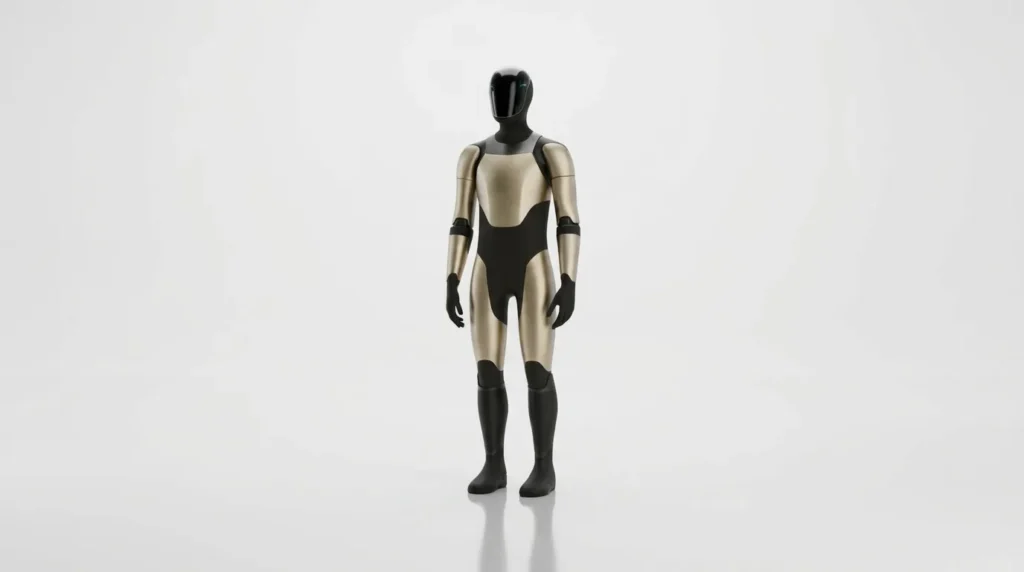
Tesla’s Android app contains three robot images labeled “Gen 3,” offering a new clue about the company’s next Optimus model. The files do not confirm the final production design. They do, however, show that Tesla has created and retained a set of robot assets linked internally to its third-generation program.
Three files carry the Gen 3 name
The images were found in Tesla Android app version 4.60.5-4573. Their filenames are:
- robot_closeup_gen3.png
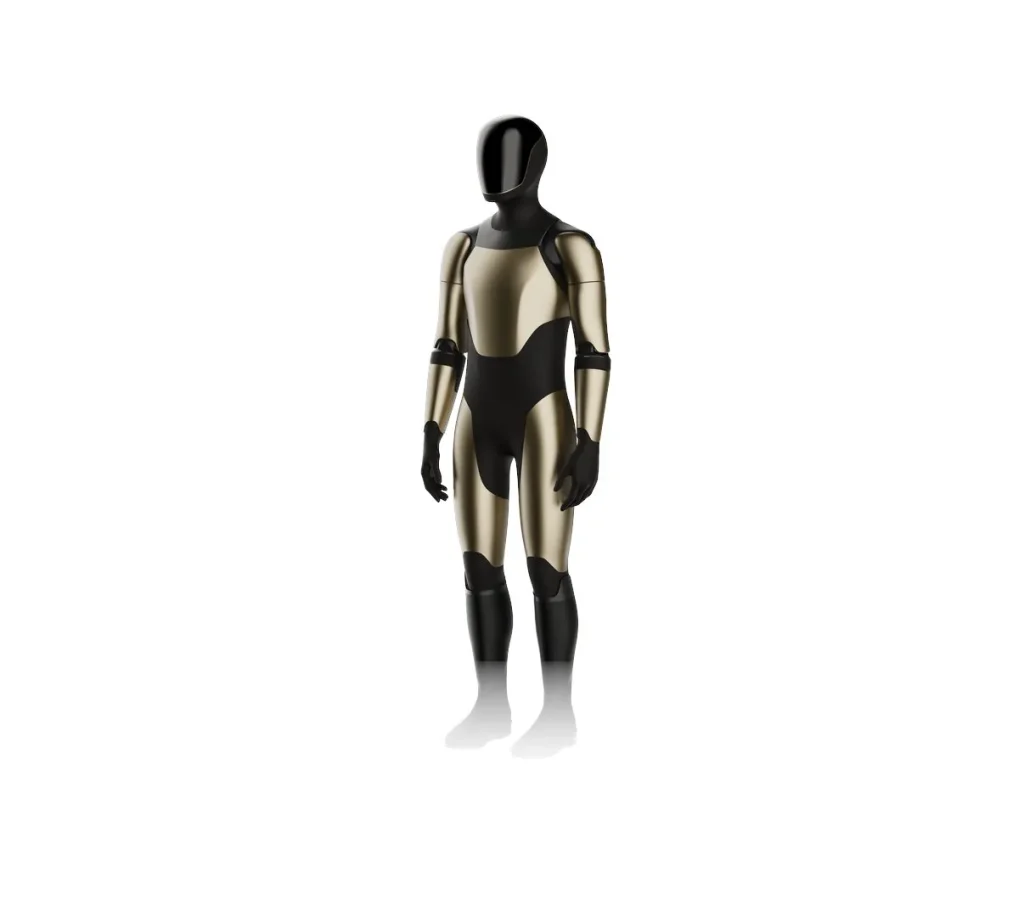
- robot_home_full_body_gen3.png
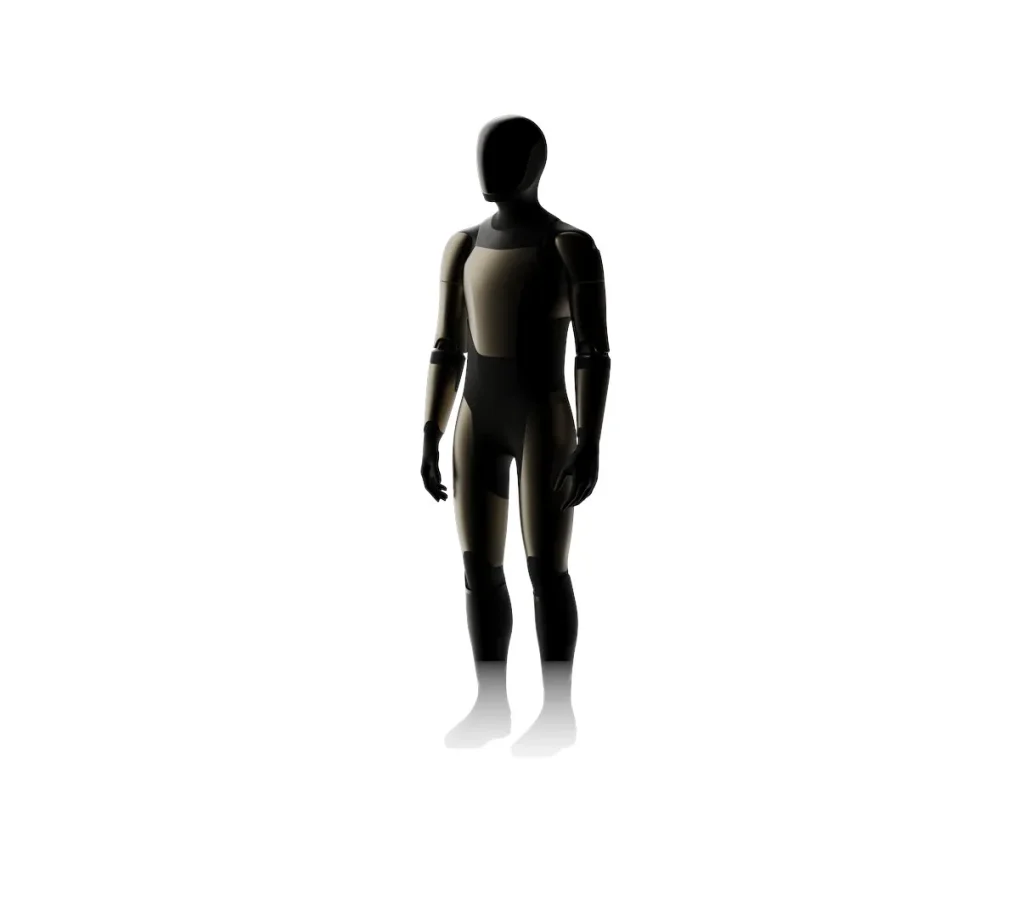
- robot_home_inactive_gen3.png

The files are part of the app’s signed asset package. They can be extracted from the package without decrypting the application, giving the discovery a clear technical basis. Still, the files are static PNG images. They do not prove that Tesla has activated a public Optimus section in the app, or that customers can connect a robot to their accounts.
Artwork appeared in an earlier release
The three Gen 3 files first appeared in Tesla app version 4.60.0-4542, released on August 27, 2026. Tesla kept the artwork in version 4.60.5-4573, released on September 5. In that release, the company replaced the full-body and inactive images with higher-resolution files measuring 1206 by 1065 pixels.
The same Gen 3 assets remained in app version 4.61.0-4607, released on September 22. A file comparison found no byte-level changes between the images in versions 4.60.5 and 4.61.0. That continued presence makes the files less likely to be a temporary test asset, but it still does not establish how Tesla plans to use them.
Three robot designs are included
The app package contains nine robot PNG files divided into three groups: standard, _gold and _gen3. Each group includes a close-up image, a full-body image and an inactive image. The structure gives Tesla multiple robot artwork options for a shared app interface.
The Gen 3 full-body image has more complete exterior covering around the hips and lower legs than the gold version. The inactive image uses a darker appearance and appears intended for a separate status or connection state.
The file names do not explain what “inactive” represents. It could refer to an offline or unlinked robot, or it could simply be part of Tesla’s internal interface design.
App code adds more Optimus references
Tesla’s recent app releases contain other references linked to Optimus. Version 4.61.0 includes fields such as optimus_charger_id and an energy-model entry called SITE_TYPE_OPTIMUS. Those entries indicate that Tesla is preparing software support for Optimus and related charging equipment. They do not confirm a customer-facing robot service, a live charging feature or a launch schedule.
A review of the app’s JavaScript bundles found no direct references to the robot_* filenames. Tesla could load the images through another method, so the lack of direct references does not establish that the artwork is unused.
The app contains another _gen3 reference connected to Tesla’s Gen 3 Wall Connector. That entry is separate from the Optimus files and should not be used as evidence about the robot.
Tesla is preparing production lines
Tesla described Optimus Gen 3 in January as its first version intended for mass production. The company said the robot would include major upgrades over version 2.5, including a new hand design.
Tesla set a production target before the end of 2026 and later provided more detail in its second-quarter update. The company said it had removed Model S and Model X production lines at Fremont, California, and was installing its first Optimus production lines there.
Tesla said the first robots would go to the Optimus Academy. The facility is intended to collect training data and support further robot development before any wider rollout.
The app confirms that Tesla has created robot artwork carrying the internal name “Gen 3.” It confirms that the company retained the files across several Android releases, and that Tesla is adding separate Optimus-related entries to its app code.
The evidence does not confirm the final body design, production specifications or a customer delivery date. Tesla has not publicly explained the images or formally introduced the finished Gen 3 robot.
We’ve launched an official Tesla Owners Online Forum. Join early and claim your "Founding Fuel" badge.