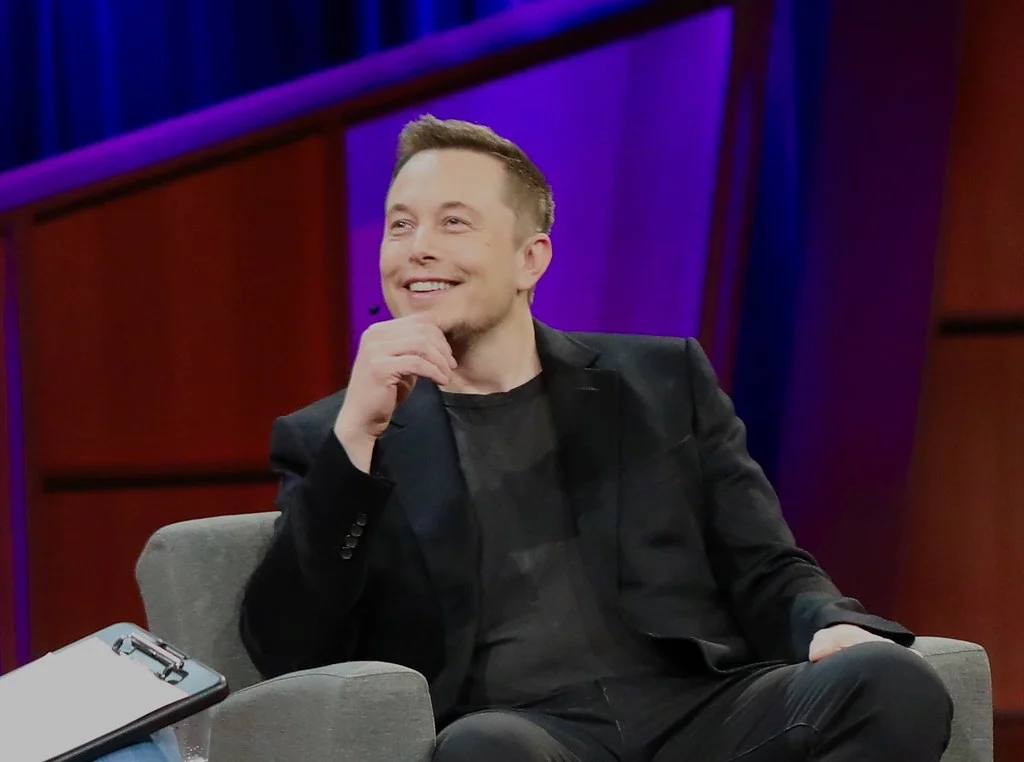
Elon Musk sat down with Zanny Minton Beddoes, editor-in-chief of The Economist, and laid out a timeline for artificial intelligence that leaves little room for humans to stay in charge. The interview was recorded late in July 2026 at Tesla’s Giga facility, and in it Musk said he no longer expects people to hold the reins of their own future once the next ten years pass.
He gave two dates. AI, he said, will pass the combined intelligence of every human on the planet in about five years, so somewhere around 2031. And by 2036, the gap between machine and human ability will have grown so wide that the idea of humans staying in control stops making sense to him.
To make the point land, Musk pulled out a comparison he has used before, and this time he pressed it further. If the distance between AI and human intelligence ends up bigger than the distance between humans and chimpanzees, he said, then picture a world where chimpanzees run things. That is roughly the position humans would be in.
A change in tone
There was a time when Musk framed himself as a brake on AI. He brought up his own history founding OpenAI, a project he started in part to slow the field down and pull it away from Google’s grip on the technology. Now he talks about AI’s pace as something close to unstoppable, a force to steer around rather than stop.
Beddoes pressed him on a number he has floated before, a 10 to 20% chance that AI leads to a catastrophic outcome for humanity. Musk did not back away from that figure. Instead he leaned into a bigger, colder frame. Eventually the universe reaches heat death and every outcome stops counting for anything, so the road matters more than where it ends. “Even if there was a stop button, we probably shouldn’t press it,” he said.
In place of a halt, he floated something softer, a safety review run by the AI industry itself, with the major players checking each other’s work rather than waiting on outside rules.
Abundance and risk, side by side
And yet Musk still paints an upbeat picture of daily life once this shift happens. He described a coming “age of amazing abundance,” where, in his words, “anyone can have anything they think of.” A world stocked with robots and digital intelligence, he said, would work something like a “quasi-infinite economy.”
Beddoes kept pushing, asking how that vision of plenty squares with a real chance of catastrophe, and what happens to his own companies once AI takes the wheel. Musk never fully closed that gap. He kept returning to both pictures at once, abundance on one hand and a real chance of disaster on the other, without saying which one he actually expects to come true.
Beddoes brought up Demis Hassabis, head of Google DeepMind, who has called on governments to act on AI within six months. Musk brushed the timeline off as slow next to what he sees happening now. “Six months is a long time,” he said. “There’s so many AI breakthrough announcements, sometimes multiple per day. I lost track.”
That line, more than anything else in the conversation, captures where Musk stands now. The question of slowing AI down looks settled to him already, and the only thing left to work out is how people get through what comes next.
You can watch The Economist’s interview below:
This article draws on reporting and interview material from The Economist’s conversation with Elon Musk, conducted by editor-in-chief Zanny Minton Beddoes.
We’ve launched an official Tesla Owners Online Forum. Join early and claim your "Founding Fuel" badge.